


What's the easiest implementation for transforming a graph to its dual? I couldn't find any easy to understand algos so i need some help.
→ Pay attention
→ Top rated
| # | User | Rating |
|---|---|---|
| 1 | jiangly | 3810 |
| 2 | Benq | 3676 |
| 3 | Kevin114514 | 3655 |
| 4 | maroonrk | 3463 |
| 5 | strapple | 3390 |
| 6 | Um_nik | 3387 |
| 7 | tourist | 3384 |
| 8 | heuristica | 3322 |
| 9 | turmax | 3319 |
| 10 | jiangbowen | 3291 |
→ Top contributors
| # | User | Contrib. |
|---|---|---|
| 1 | Qingyu | 157 |
| 2 | nik_exists | 150 |
| 2 | maspy | 150 |
| 4 | Um_nik | 143 |
| 4 | AmShZ | 143 |
| 6 | Errichto | 139 |
| 7 | adamant | 137 |
| 8 | maroonrk | 134 |
| 9 | BledDest | 132 |
| 10 | qwexd | 129 |
→ Find user
→ Recent actions


As for many combinatorial etc. tasks we choose to perform %(mod) operation with a prime no.(M) but is the information lost?i.e Can we map back to the orignal no of combinations whose max value we actually restricted to M.
Extra question:
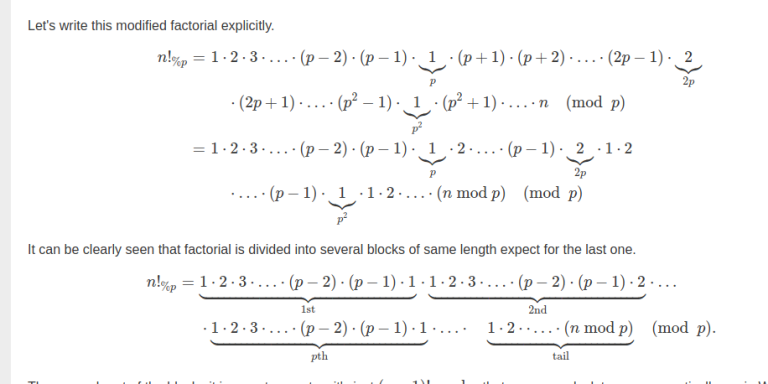
In the given image while calculating %p for each why is np%p=1 {n=1,2,3,4.. } instead of 0.

https://www.codechef.com/problems/EDIT Can someone give me an intuition on how to approach this problem ?
Codeforces (c) Copyright 2010-2026 Mike Mirzayanov
The only programming contests Web 2.0 platform
Server time: Oct/06/2026 20:18:13 (g2).
Desktop version, switch to mobile version.
Supported by