



→ Pay attention
→ Streams
→ Top rated
| # | User | Rating |
|---|---|---|
| 1 | Benq | 3676 |
| 2 | jiangly | 3670 |
| 3 | Kevin114514 | 3657 |
| 4 | maroonrk | 3355 |
| 5 | Um_nik | 3353 |
| 6 | squareOf105 | 3346 |
| 7 | tourist | 3343 |
| 8 | strapple | 3324 |
| 9 | heuristica | 3322 |
| 10 | jiangbowen | 3291 |
→ Top contributors
| # | User | Contrib. |
|---|---|---|
| 1 | Qingyu | 158 |
| 2 | nik_exists | 150 |
| 2 | maspy | 150 |
| 4 | AmShZ | 143 |
| 5 | Um_nik | 141 |
| 6 | Errichto | 139 |
| 7 | adamant | 137 |
| 8 | BledDest | 133 |
| 8 | maroonrk | 133 |
| 10 | qwexd | 130 |
→ Find user
→ Recent actions


I have a step function 'V', over a domain 't' in [0,10^7]. It has shape as shown below.
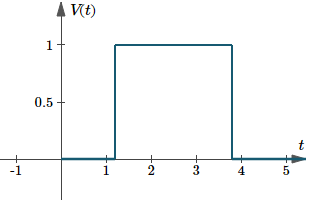
V(t) = 0 for t in [0,a),
...... = 1 for t in (a,b), and
...... = 0 for t in (b,10^7]
for some 0 <= a < b <= 10^7.
What is the best way to find a and b (i.e., the starting and ending points of V(t)=1)? Can binary/ternary search be applied in this case?

Codeforces (c) Copyright 2010-2026 Mike Mirzayanov
The only programming contests Web 2.0 platform
Server time: Oct/14/2026 04:18:49 (i1).
Desktop version, switch to mobile version.
Supported by


