


Editorial
Tutorial is loading...
Solution (fcspartakm)
#include <bits/stdc++.h>
using namespace std;
int a1, a2, k1, k2, n;
inline void read() {
cin >> a1 >> a2 >> k1 >> k2 >> n;
}
inline void solve() {
if (k1 > k2) {
swap(k1, k2);
swap(a1, a2);
}
int minCnt = max(0, n — a1 * (k1 — 1) — a2 * (k2 — 1));
int maxCnt = 0;
if (n <= a1 * k1) {
maxCnt = n / k1;
} else {
maxCnt = a1 + (n — a1 * k1) / k2;
}
cout << minCnt << ' ' << maxCnt << endl;
}
int main () {
#ifdef fcspartakm
freopen("input.txt", "r", stdin);
//freopen("output.txt", "w", stdout);
#endif
srand(time(NULL));
cerr << setprecision(10) << fixed;
read();
solve();
//cerr << "TIME: " << clock() << endl;
}
1215B - The Number of Products
Editorial
Tutorial is loading...
Solution (fcspartakm)
#include <bits/stdc++.h>

using namespace std;

const int N = 200 * 1000 + 13;

int n;
int a[N];

inline void read() {
	cin >> n;
	for (int i = 0; i < n; i++) {
		cin >> a[i];
	}
}

inline void solve() {
	int pos = -1;
	li ans0 = 0;
	for (int i = 0; i < n; i++) {
		if (a[i] == 0) {
			pos = i;
		}
		if (pos != -1) {
			ans0 += pos + 1;
		}
	}
	int cnt1 = 0, cnt2 = 0;
	int bal = 0;
	li ansP = 0;
	for (int i = 0; i < n; i++) {
		if (a[i] == 0) {
			cnt1 = 0, cnt2 = 0, bal = 0;
			continue;
		}
		if (bal % 2 == 0) {
			cnt1++;
		} else {
			cnt2++;
		}
		if (a[i] < 0) {
			bal++;
		}
		if (bal % 2 == 0) {
			ansP += cnt1;
		} else {
			ansP += cnt2;
		}
	}
	cout << n * 1ll * (n + 1) / 2 - ans0 - ansP << ' ' << ansP << endl;
}

int main () {
#ifdef fcspartakm
    freopen("input.txt", "r", stdin);
    //freopen("output.txt", "w", stdout);
#endif
    srand(time(NULL));
    cerr << setprecision(10) << fixed;

    read();
    solve();

    //cerr << "TIME: " << clock() << endl;
}
Editorial
Tutorial is loading...
Solution (fcspartakm)
#include<bits/stdc++.h>

using namespace std;

int n;
string s, t;

inline void read() {
	cin >> n >> s >> t;
}

inline void solve() {
	vector<int> pos01, pos10;
	for (int i = 0; i < n; i++) {
		if (s[i] != t[i]) {
			if (s[i] == 'a') {
				pos01.pb(i);
			} else {
				pos10.pb(i);
			}
		}
	}
	if (sz(pos01) % 2 != sz(pos10) % 2) {
		cout << -1 << endl;
		return;
	}
	vector<pair<int, int> > ans;
	for (int i = 0; i + 1 < sz(pos01); i += 2) {
		ans.pb(mp(pos01[i], pos01[i + 1]));
	}
	for (int i = 0; i + 1 < sz(pos10); i += 2) {
		ans.pb(mp(pos10[i], pos10[i + 1]));
	}
	if (sz(pos01) % 2) {
		int x = pos01.back();
		int y = pos10.back();
		ans.pb(mp(x, x));
		ans.pb(mp(x, y));
	}
	cout << sz(ans) << endl;
	for (int i = 0; i < sz(ans); i++) {
		cout << ans[i].ft + 1 << ' ' << ans[i].sc + 1 << endl;
	}
}

int main () {
#ifdef fcspartakm
    freopen("input.txt", "r", stdin);
    //freopen("output.txt", "w", stdout);
#endif
    srand(time(NULL));
    cerr << setprecision(10) << fixed;

    read();
    solve();

    //cerr << "TIME: " << clock() << endl;
}
Editorial
Tutorial is loading...
Solution (fcspartakm)
#include <iostream>
#include <set>
#include <string>
#include <vector>
#include <algorithm>
#include <cmath>

using namespace std;

int n;

int main() {
    cin >> n;
    long double sum1 = 0, sum2 = 0;
    string s;
    cin >> s;
    for (int i = 0; i < n; i++) {
        if (s[i] != '?') {
            if (i < n / 2) {
                sum1 += (long double)(s[i] - '0');
            } else {
                sum2 += (long double)(s[i] - '0');
            }
        } else {
            if (i < n / 2) {
                sum1 += (long double)4.5;
            } else {
                sum2 += (long double)4.5;
            }
        }
    }
    if (fabsl(sum1 - sum2) < 1e-9) {
        cout << "Bicarp" << endl;
    } else {
        cout << "Monocarp" << endl;
    }
}
Editorial
Tutorial is loading...
Solution (fcspartakm)
#include <iostream>
#include <set>
#include <string>
#include <vector>
#include <algorithm>

using namespace std;

const int N = 1000 * 1000 + 13;
const int M = 20 + 1;
const long long INF = 1000 * 1000 * 1000 * 1ll * 1000 * 1000 * 1000;

int n;
long long d[(1 << M)];
long long cnt[M][M];
vector<int> col[M];

int main() {
    cin >> n;
    for (int i = 0; i < n; i++) {
        int x;
        cin >> x;
        x--;
        col[x].push_back(i);
    }
    for (int i = 0; i < 20; i++) {
        for (int j = 0; j < 20; j++) {
            if (i == j) {
                continue;
            }
            if ((int)col[i].size() == 0 || (int)col[j].size() == 0) {
                continue;
            }
            int pos2 = 0;
            for (int pos1 = 0; pos1 < (int)col[i].size(); pos1++) {
                while (true) {
                    if (pos2 == (int)col[j].size() - 1 || col[j][pos2 + 1] > col[i][pos1]) {
                        break;
                    }
                    pos2++;
                }
                if (col[i][pos1] > col[j][pos2]) {
                    cnt[i][j] += pos2 + 1;
                }
            }
        }
    }

    for (int mask = 0; mask < (1 << 20); mask++) {
        d[mask] = INF;
    }
    d[0] = 0;
    for (int mask = 0; mask < (1 << 20); mask++) {
        vector<int> was;
        for (int i = 0; i < 20; i++) {
            if (mask & (1 << i)) {
                was.push_back(i);
            }
        }
        for (int i = 0; i < 20; i++) {
            if (mask & (1 << i)) {
                continue;
            }
            long long sum = 0;
            for (int j = 0; j < (int)was.size(); j++) {
                sum += cnt[was[j]][i];
            }
            int nmask = mask | (1 << i);
            d[nmask] = min(d[nmask], d[mask] + sum);
        }
    }
    cout << d[(1 << 20) - 1] << endl;
}
Editorial
Tutorial is loading...
Solution (BledDest)
#include<bits/stdc++.h>

using namespace std;

const int N = 1600043;

vector<int> g[N];
vector<int> gt[N];
int used[N];
vector<int> order;
int comp[N];
vector<int> result;
int v;

void add_edge(int v1, int v2)
{
	g[v1].push_back(v2);
	gt[v2].push_back(v1);
}

void add_disjunction(int v1, int v2)
{
	add_edge(v1 ^ 1, v2);
	add_edge(v2 ^ 1, v1);
}

void dfs1(int v)
{
	if(used[v]) return;
	used[v] = 1;
	for(auto u : g[v])
		dfs1(u);
	order.push_back(v);
}

void dfs2(int v, int cc)
{
	if(comp[v]) return;
	comp[v] = cc;
	for(auto u : gt[v])
		dfs2(u, cc);
}

bool solve2SAT()
{
	for(int i = 0; i < v * 2; i++)
		dfs1(i);
	reverse(order.begin(), order.end());
	int cc = 0;
	for(auto x : order)
	{
		if(comp[x] == 0)
		{
			cc++;
			dfs2(x, cc);
		}
	}
	for(int i = 0; i < v; i++)
	{
		if(comp[i * 2] == comp[i * 2 + 1])
			return false;
		else if(comp[i * 2] > comp[i * 2 + 1])
			result.push_back(i);
	}
	return true;
}

int main()
{
	int n, p, M, m;
	scanf("%d %d %d %d", &n, &p, &M, &m);
	v = p + M - 1;
	for(int i = 0; i < n; i++)
	{
		int x, y;
		scanf("%d %d", &x, &y);
		--x;
		--y;
		add_disjunction(x * 2, y * 2);
	}
	for(int i = 0; i < p; i++)
	{
		int l, r;
		scanf("%d %d", &l, &r);
		if(l != 1)
			add_disjunction((l - 2 + p) * 2, i * 2 + 1);
		if(r != M)
			add_disjunction((r - 1 + p) * 2 + 1, i * 2 + 1);
	}
	for(int i = 0; i < m; i++)
	{
		int x, y;
		scanf("%d %d", &x, &y);
		--x;
		--y;
		add_disjunction(x * 2 + 1, y * 2 + 1);
	}
	for(int i = 2; i <= M - 1; i++)
	{
	    int f1 = i - 2 + p;
	    int f2 = f1 + 1;
	    add_disjunction(f1 * 2, f2 * 2 + 1);
	}
	if(!solve2SAT())
	{
		puts("-1");
		return 0;
	}
	int k = 1;
	vector<int> stations;
	for(auto x : result)
		if(x < p)
			stations.push_back(x);
		else
			k = max(k, x - p + 2);
	printf("%d %d\n", int(stations.size()), k);
	for(auto x : stations)
		printf("%d ", x + 1);
	return 0;
}





 .
 . Firstly, each submatrix
 non-intersecting submatrices fit in matrix
 .


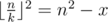

 . Due to rounding down, it's enough to check only this value of
 and push these values to heap. When finished,




 and the second sigma by





 solution:
 , but in fact it's pretty fast.
 (let's call this process reduction, we will need it later). If we get


