


Limak is a little polar bear. He has n balls, the i-th ball has size ti.
Limak wants to give one ball to each of his three friends. Giving gifts isn't easy — there are two rules Limak must obey to make friends happy:
- No two friends can get balls of the same size.
- No two friends can get balls of sizes that differ by more than 2.
For example, Limak can choose balls with sizes 4, 5 and 3, or balls with sizes 90, 91 and 92. But he can't choose balls with sizes 5, 5 and 6 (two friends would get balls of the same size), and he can't choose balls with sizes 30, 31 and 33 (because sizes 30 and 33 differ by more than 2).
Your task is to check whether Limak can choose three balls that satisfy conditions above.
The first line of the input contains one integer n (3 ≤ n ≤ 50) — the number of balls Limak has.
The second line contains n integers t1, t2, ..., tn (1 ≤ ti ≤ 1000) where ti denotes the size of the i-th ball.
Print "YES" (without quotes) if Limak can choose three balls of distinct sizes, such that any two of them differ by no more than 2. Otherwise, print "NO" (without quotes).
4
18 55 16 17
YES
6
40 41 43 44 44 44
NO
8
5 972 3 4 1 4 970 971
YES
In the first sample, there are 4 balls and Limak is able to choose three of them to satisfy the rules. He must must choose balls with sizes 18, 16 and 17.
In the second sample, there is no way to give gifts to three friends without breaking the rules.
In the third sample, there is even more than one way to choose balls:
- Choose balls with sizes 3, 4 and 5.
- Choose balls with sizes 972, 970, 971.
Limak is a little polar bear. Polar bears hate long strings and thus they like to compress them. You should also know that Limak is so young that he knows only first six letters of the English alphabet: 'a', 'b', 'c', 'd', 'e' and 'f'.
You are given a set of q possible operations. Limak can perform them in any order, any operation may be applied any number of times. The i-th operation is described by a string ai of length two and a string bi of length one. No two of q possible operations have the same string ai.
When Limak has a string s he can perform the i-th operation on s if the first two letters of s match a two-letter string ai. Performing the i-th operation removes first two letters of s and inserts there a string bi. See the notes section for further clarification.
You may note that performing an operation decreases the length of a string s exactly by 1. Also, for some sets of operations there may be a string that cannot be compressed any further, because the first two letters don't match any ai.
Limak wants to start with a string of length n and perform n - 1 operations to finally get a one-letter string "a". In how many ways can he choose the starting string to be able to get "a"? Remember that Limak can use only letters he knows.
The first line contains two integers n and q (2 ≤ n ≤ 6, 1 ≤ q ≤ 36) — the length of the initial string and the number of available operations.
The next q lines describe the possible operations. The i-th of them contains two strings ai and bi (|ai| = 2, |bi| = 1). It's guaranteed that ai ≠ aj for i ≠ j and that all ai and bi consist of only first six lowercase English letters.
Print the number of strings of length n that Limak will be able to transform to string "a" by applying only operations given in the input.
3 5
ab a
cc c
ca a
ee c
ff d
4
2 8
af e
dc d
cc f
bc b
da b
eb a
bb b
ff c
1
6 2
bb a
ba a
0
In the first sample, we count initial strings of length 3 from which Limak can get a required string "a". There are 4 such strings: "abb", "cab", "cca", "eea". The first one Limak can compress using operation 1 two times (changing "ab" to a single "a"). The first operation would change "abb" to "ab" and the second operation would change "ab" to "a".
Other three strings may be compressed as follows:
- "cab"
 "ab" "a"
- "cca" "ca" "a"
- "eea" "ca" "a"
In the second sample, the only correct initial string is "eb" because it can be immediately compressed to "a".
The life goes up and down, just like nice sequences. Sequence t1, t2, ..., tn is called nice if the following two conditions are satisfied:
- ti < ti + 1 for each odd i < n;
- ti > ti + 1 for each even i < n.
For example, sequences (2, 8), (1, 5, 1) and (2, 5, 1, 100, 99, 120) are nice, while (1, 1), (1, 2, 3) and (2, 5, 3, 2) are not.
Bear Limak has a sequence of positive integers t1, t2, ..., tn. This sequence is not nice now and Limak wants to fix it by a single swap. He is going to choose two indices i < j and swap elements ti and tj in order to get a nice sequence. Count the number of ways to do so. Two ways are considered different if indices of elements chosen for a swap are different.
The first line of the input contains one integer n (2 ≤ n ≤ 150 000) — the length of the sequence.
The second line contains n integers t1, t2, ..., tn (1 ≤ ti ≤ 150 000) — the initial sequence. It's guaranteed that the given sequence is not nice.
Print the number of ways to swap two elements exactly once in order to get a nice sequence.
5
2 8 4 7 7
2
4
200 150 100 50
1
10
3 2 1 4 1 4 1 4 1 4
8
9
1 2 3 4 5 6 7 8 9
0
In the first sample, there are two ways to get a nice sequence with one swap:
- Swap t2 = 8 with t4 = 7.
- Swap t1 = 2 with t5 = 7.
In the second sample, there is only one way — Limak should swap t1 = 200 with t4 = 50.
Niwel is a little golden bear. As everyone knows, bears live in forests, but Niwel got tired of seeing all the trees so he decided to move to the city.
In the city, Niwel took on a job managing bears to deliver goods. The city that he lives in can be represented as a directed graph with n nodes and m edges. Each edge has a weight capacity. A delivery consists of a bear carrying weights with their bear hands on a simple path from node 1 to node n. The total weight that travels across a particular edge must not exceed the weight capacity of that edge.
Niwel has exactly x bears. In the interest of fairness, no bear can rest, and the weight that each bear carries must be exactly the same. However, each bear may take different paths if they like.
Niwel would like to determine, what is the maximum amount of weight he can deliver (it's the sum of weights carried by bears). Find the maximum weight.
The first line contains three integers n, m and x (2 ≤ n ≤ 50, 1 ≤ m ≤ 500, 1 ≤ x ≤ 100 000) — the number of nodes, the number of directed edges and the number of bears, respectively.
Each of the following m lines contains three integers ai, bi and ci (1 ≤ ai, bi ≤ n, ai ≠ bi, 1 ≤ ci ≤ 1 000 000). This represents a directed edge from node ai to bi with weight capacity ci. There are no self loops and no multiple edges from one city to the other city. More formally, for each i and j that i ≠ j it's guaranteed that ai ≠ aj or bi ≠ bj. It is also guaranteed that there is at least one path from node 1 to node n.
Print one real value on a single line — the maximum amount of weight Niwel can deliver if he uses exactly x bears. Your answer will be considered correct if its absolute or relative error does not exceed 10 - 6.
Namely: let's assume that your answer is a, and the answer of the jury is b. The checker program will consider your answer correct if 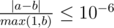 .
4 4 3
1 2 2
2 4 1
1 3 1
3 4 2
1.5000000000
5 11 23
1 2 3
2 3 4
3 4 5
4 5 6
1 3 4
2 4 5
3 5 6
1 4 2
2 5 3
1 5 2
3 2 30
10.2222222222
In the first sample, Niwel has three bears. Two bears can choose the path  , while one bear can choose the path
 . Even though the bear that goes on the path can carry one unit of weight, in the interest of fairness, he is restricted to carry 0.5 units of weight. Thus, the total weight is 1.5 units overall. Note that even though Niwel can deliver more weight with just 2 bears, he must use exactly 3 bears on this day.
A tree is a connected undirected graph consisting of n vertices and n - 1 edges. Vertices are numbered 1 through n.
Limak is a little polar bear. He once had a tree with n vertices but he lost it. He still remembers something about the lost tree though.
You are given m pairs of vertices (a1, b1), (a2, b2), ..., (am, bm). Limak remembers that for each i there was no edge between ai and bi. He also remembers that vertex 1 was incident to exactly k edges (its degree was equal to k).
Is it possible that Limak remembers everything correctly? Check whether there exists a tree satisfying the given conditions.
The first line of the input contains three integers n, m and k ( ) — the number of vertices in Limak's tree, the number of forbidden pairs of vertices, and the degree of vertex 1, respectively.
The i-th of next m lines contains two distinct integers ai and bi (1 ≤ ai, bi ≤ n, ai ≠ bi) — the i-th pair that is forbidden. It's guaranteed that each pair of vertices will appear at most once in the input.
Print "possible" (without quotes) if there exists at least one tree satisfying the given conditions. Otherwise, print "impossible" (without quotes).
5 4 2
1 2
2 3
4 2
4 1
possible
6 5 3
1 2
1 3
1 4
1 5
1 6
impossible
In the first sample, there are n = 5 vertices. The degree of vertex 1 should be k = 2. All conditions are satisfied for a tree with edges 1 - 5, 5 - 2, 1 - 3 and 3 - 4.
In the second sample, Limak remembers that none of the following edges existed: 1 - 2, 1 - 3, 1 - 4, 1 - 5 and 1 - 6. Hence, vertex 1 couldn't be connected to any other vertex and it implies that there is no suitable tree.
Alex was programming while Valentina (his toddler daughter) got there and started asking many questions about the round brackets (or parenthesis) in the code. He explained her a bit and when she got it he gave her a task in order to finish his code on time.
For the purpose of this problem we consider only strings consisting of opening and closing round brackets, that is characters '(' and ')'.
The sequence of brackets is called correct if:
- it's empty;
- it's a correct sequence of brackets, enclosed in a pair of opening and closing brackets;
- it's a concatenation of two correct sequences of brackets.
For example, the sequences "()()" and "((()))(())" are correct, while ")(()", "(((((" and "())" are not.
Alex took a piece of paper, wrote a string s consisting of brackets and asked Valentina to count the number of distinct non-empty substrings of s that are correct sequences of brackets. In other words, her task is to count the number of non-empty correct sequences of brackets that occur in a string s as a substring (don't mix up with subsequences).
When Valentina finished the task, Alex noticed he doesn't know the answer. Help him don't loose face in front of Valentina and solve the problem!
The first line of the input contains an integer n (1 ≤ n ≤ 500 000) — the length of the string s.
The second line contains a string s of length n consisting of only '(' and ')'.
Print the number of distinct non-empty correct sequences that occur in s as substring.
10
()()()()()
5
7
)(())()
3
In the first sample, there are 5 distinct substrings we should count: "()", "()()", "()()()", "()()()()" and "()()()()()".
In the second sample, there are 3 distinct substrings we should count: "()", "(())" and "(())()".
Pussycat Sonya has an array consisting of n positive integers. There are 2n possible subsequences of the array. For each subsequence she counts the minimum number of operations to make all its elements equal. Each operation must be one of two:
- Choose some element of the subsequence and multiply it by some prime number.
- Choose some element of the subsequence and divide it by some prime number. The chosen element must be divisible by the chosen prime number.
What is the sum of minimum number of operations for all 2n possible subsequences? Find and print this sum modulo 109 + 7.
The first line of the input contains a single integer n (1 ≤ n ≤ 300 000) — the size of the array.
The second line contains n integers t1, t2, ..., tn (1 ≤ ti ≤ 300 000) — elements of the array.
Print the sum of minimum number of operation for all possible subsequences of the given array modulo 109 + 7.
3
60 60 40
6
4
1 2 3 4
24
In the first sample, there are 8 possible subsequences: (60, 60, 40), (60, 60), (60, 40), (60, 40), (60), (60), (40) and () (empty subsequence).
For a subsequence (60, 60, 40) we can make all elements equal by two operations — divide 40 by 2 to get 20, and then multiply 20 by 3 to get 60. It's impossible to achieve the goal using less operations and thus we add 2 to the answer.
There are two subsequences equal to (60, 40) and for each of them the also need to make at least 2 operations.
In each of other subsequences all numbers are already equal, so we need 0 operations for each of them. The sum is equal to 2 + 2 + 2 = 6.