


| # | User | Rating |
|---|---|---|
| 1 | jiangly | 3810 |
| 2 | Benq | 3676 |
| 3 | Kevin114514 | 3655 |
| 4 | maroonrk | 3463 |
| 5 | strapple | 3447 |
| 6 | Um_nik | 3387 |
| 7 | heuristica | 3322 |
| 8 | turmax | 3317 |
| 9 | tourist | 3307 |
| 10 | jiangbowen | 3291 |
| # | User | Contrib. |
|---|---|---|
| 1 | Qingyu | 156 |
| 2 | nik_exists | 150 |
| 2 | maspy | 150 |
| 4 | Um_nik | 141 |
| 5 | Errichto | 139 |
| 6 | adamant | 137 |
| 7 | AmShZ | 135 |
| 8 | BledDest | 132 |
| 9 | maroonrk | 131 |
| 10 | qwexd | 129 |


|
+17
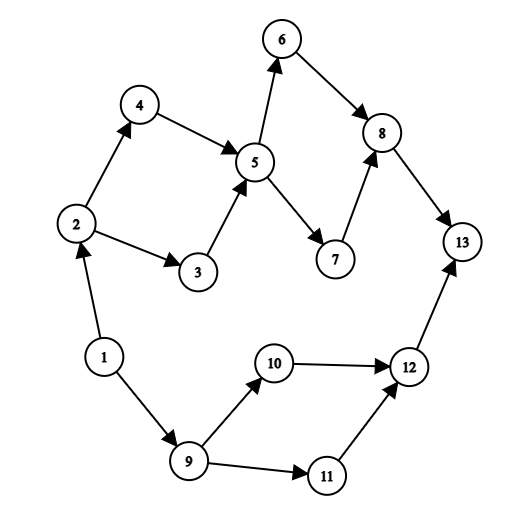
First, we can split k into power of 2s. Implementing division by 2 is not so hard so I will leave it to you. Then we can notice that its not hard to create a graph that contains exactly 2^k path from 1 to n. For example: Graph with 2 paths.
Graph with 4 paths
Then we can combine these graph together to form k. Graph with 6 paths.
I don't have a exact maximum number of nodes / edges that this requires but it should be well under the limit |


|
0
Has the finalists of each track been announced? |
|
0
Can someone help? |
|
0
"change an interval to be equal to some given x" and "calculate the number of positions with a value greater than or equal to y" (sets and fenwick)". Can you briefly explain how to do this? Thanks. |
|
0
Can someone help? |
|
0
Thanks! I got it :)) |
|
0
Auto comment: topic has been updated by Sammmmmmm (previous revision, new revision, compare). |
|
+5
No, it's not. Somebody already sent the link. |
|
+8
Tysm. That's such a cool solution! |
|
0
Auto comment: topic has been updated by Sammmmmmm (previous revision, new revision, compare). |
|
0
Auto comment: topic has been updated by Sammmmmmm (previous revision, new revision, compare). |
|
0
Auto comment: topic has been updated by Sammmmmmm (previous revision, new revision, compare). |
|
0
Hi, may I ask for the solution for DAY 2 C: Sopsug. Thanks |


